
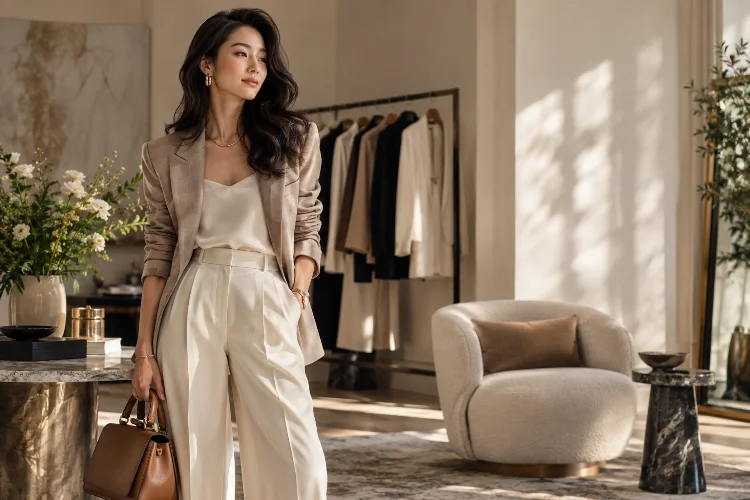
Some people seem instantly recognizable even when they are wearing completely different outfits. Maybe it is their color palette, the shape of their jackets, their accessories, or simply the way everything looks intentional.
That is the power of a signature image.
An advanced personal style strategy for building a signature image is not about wearing the same clothes every day or copying a celebrity’s wardrobe.
It is about developing a repeatable visual language that reflects your personality, lifestyle, and the impression you want to communicate.
Clothing can contribute to self-presentation and influence impressions others form.
Research involving working adults has also found that daily clothing choices are connected with self-presentational motives, while other studies suggest even relatively small differences in attire can affect first impressions.
The goal is therefore bigger than “looking fashionable.” A strong personal style makes getting dressed easier, shopping more strategic, and your overall appearance more coherent without requiring an enormous wardrobe.
1. Define the Image Before Choosing the Clothes
The easiest way to create an inconsistent wardrobe is to shop without knowing what you want your appearance to communicate.
Start with three to five words describing your ideal image.
You might choose relaxed, polished, modern, and creative. Someone else might prefer minimal, authoritative, elegant, and understated.
These words become filters.
A dramatic floral shirt might look fantastic in isolation, but if your desired style is quiet, structured, and minimalist, it may rarely work with the rest of your wardrobe.
Research on clothing and self-presentation supports the broader idea that people use dress partly to manage how they present themselves socially. Clothing has also been studied as part of identity and self-concept rather than simply as functional covering.
Your style becomes clearer when your purchases serve an identity rather than a temporary trend.
2. Build a Recognizable Color Language
You do not need to wear one color forever to become visually recognizable.
Instead, build a controlled palette.
Choose several core neutrals that work easily together, then add a smaller group of signature colors. Someone might build around charcoal, white, navy, and beige while repeatedly using forest green or burgundy as accents.
Another person might prefer black, cream, denim blue, and silver.
Repeating colors creates visual continuity even when the individual garments change.
Use signature colors strategically
Your strongest color does not need to cover your whole outfit.
It might appear regularly in a scarf, shirt, bag, shoes, jewelry, watch strap, or outerwear.
Research into clothing color suggests color can influence perceptions and may also affect wearers themselves, although these effects depend heavily on context and should not be treated as universal rules.
Rather than searching for a supposedly “powerful” color, choose shades that work with your wardrobe and that you genuinely enjoy repeating.
Recognition comes from consistancy.
3. Develop Two or Three Signature Silhouettes
Color is only one part of visual identity. Shape can be even more recognizable.
Look at outfits in which you consistently feel comfortable and put together.
Maybe you prefer high-waisted trousers with fitted tops and structured jackets. Perhaps your formula is relaxed trousers, oversized shirts, and clean sneakers. Someone else may repeatedly gravitate toward straight denim, simple knitwear, and long outerwear.
These patterns are valuable.
Your signature image becomes easier to maintain when you identify two or three silhouettes that work with your proportions, activities, and personal preferences.
Fit deserves particular attention. A 2024 study involving 502 fashion consumers found relationships between clothing fit, self-evaluation, confident clothing decisions, and psychological well-being.
A perfectly fashionable item that never feels right on your body is unlikely to become part of your genuine signature style.
4. Create Outfit Formulas Instead of Individual Outfits
People often imagine stylish dressing requires endless creativity.
It usually requires better systems.
An outfit formula is simply a combination that works repeatedly.
For example:
Straight trousers + simple top + structured outer layer + minimal shoes
The exact items can change while the underlying formula stays the same.
You could wear cream trousers, a black knit, blazer, and loafers on Monday, then dark jeans, a white T-shirt, lightweight jacket, and sneakers on Friday.
The visual DNA remains consistent.
This reduces decision fatigue and makes shopping significantly easier because you know what role a potential purchase needs to fill.
Instead of asking, “Do I like this jacket?” ask, “Does this jacket work with one of my main outfit formulas?”
That small change can prevent many impulsive purchases.
5. Use One or Two Signature Details
Signature style becomes memorable through repetition.
This is where accessories, grooming, and small details become powerful.
You might consistently wear silver jewelry, rectangular glasses, leather loafers, rolled sleeves, a particular watch style, monochromatic outfits, or one type of bag.
Hair and grooming can become part of the system too.
The idea is not to create a costume.
You simply want a few details to appear often enough that they become associated with your overall image.
Clothing research shows that relatively subtle changes in attire can affect how observers evaluate someone.
One study found differences in first impressions from relatively minor changes in male formalwear, illustrating that small visual details may carry more information than we assume.
Signature details work because repetition builds familiarity.
6. Prioritize Fit and Proportion Over Trend Accuracy
Following trends perfectly does not automatically create good personal style.
In fact, constantly chasing trends can make your appearance less recognizable because the visual language changes every season.
Pay more attention to proportion.
Notice where trousers break, where jackets end, how shoulder seams sit, how wide your preferred silhouettes are, and which combinations make you feel visually balanced.
Tailoring can sometimes transform an ordinary garment more effectively than replacing it with something more expensive.
This is particularly useful for foundational pieces such as trousers, blazers, coats, shirts, and dresses.
A wardrobe built around reliable fit also becomes easier to combine.
You know that your jackets work with your trousers, your footwear supports the proportions, and most pieces speak the same visual language.
Trend awareness can still be fun. Just treat trends as optional accents rather than instructions.
7. Build a Wardrobe With Controlled Repetition
A signature wardrobe should repeat itself.
That sounds almost wrong in a culture constantly promoting novelty, but repetition is precisely what creates recognition.
You may own several white shirts because white shirts genuinely belong to your style. You might have three versions of the same trouser silhouette or several similar knitwear pieces in different colors.
That is not neccessarily boring duplication.
It can be strategic consistency.
Recent research into capsule wardrobes and sustainable fashion consumption has examined how smaller, more deliberate wardrobes can connect with durability, sufficiency, and more intentional purchasing, although motivations differ considerably among consumers.
The goal is not to reach an arbitrary number such as 30 or 40 garments.
Build enough variety for your real life while allowing your strongest ideas to repeat.
8. Separate Signature Style From a Uniform
There is an important difference between consistency and rigidity.
Signature style has rules, but those rules should have room to breathe.
Your visual identity might usually include clean silhouettes and muted colors, but that does not mean you cannot wear a bright vacation shirt. A mostly tailored wardrobe can still include relaxed weekend clothes.
Think in terms of 80% identity and 20% experimentation.
That experimental space prevents style from becoming stale while protecting the elements that make it recognizable.
Clothing is closely connected with self-expression and identity, but research also shows considerable variation in how people use fashion to negotiate individuality, comfort, body image, and social expectations.
Your signature should therefore evolve with you.
Do not preserve an image that no longer fits your actual life.
9. Audit Your Image Through Photographs
Mirrors are useful, but photographs reveal patterns.
Take occasional full-length photos of outfits you genuinely enjoyed wearing. After a few weeks, compare them.
You may notice that your best looks repeatedly use similar trouser widths, colors, jacket lengths, footwear, or accessories.
Those patterns are your personal data.
You may also discover pieces that looked exciting in the store but consistently feel disconnected from everything else.
Use that information before your next shopping trip.
A personal style strategy becomes much more powerfull when decisions are based on what you actually wear rather than an imaginary future version of yourself.
Building a signature image is not about creating a fashionable character and performing it every day. It is about understanding which colors, silhouettes, proportions, details, and outfit combinations represent you most naturally.
Start with a few descriptive style words, establish a controlled color palette, identify your strongest silhouettes, and create repeatable outfit formulas.
Then use accessories, grooming, and carefully chosen variations to make the image recognizable without becoming rigid.
Most importantly, review what you already wear before buying more. Photograph your favorite outfits, identify the patterns, and let those patterns guide future purchases.
Over time, your wardrobe becomes easier to manage and your image becomes more distinctive – not because you are trying harder, but because every element is working in the same direction.